Provide All Relevant Information - Submit Query

Student Visa

Profile Check Form

Click Here ×
S
t
u
d
e
n
t

V
i
s
a

Get in Touch

    New Zealand’s incoming Prime Minister Chris Hipkins expected to make immigration settings changes

    Business, tourism and agriculture leaders are calling on New Zealand’s incoming Prime Minister Chris Hipkins to make immigration settings a top priority.

    Chris Hipkins is set to become New Zealand’s next prime minister after being confirmed as the only nominee for the Labour Party leadership, after Prime Minister Jacinda Ardern announced her resignation on Thursday.

    The call comes as the country faces increasing pressure from depleted industries due to the ongoing pandemic, with many sectors relying on skilled workers from abroad to fill the gap. Although the current government has made some progress in easing restrictions on long-term visas for essential workers, advocates say more needs to be done to ensure that businesses have access to the people they need. “Immigration settings are an important part of our economic recovery,” said one business leader. “We need to ensure that we have enough people with skills and experience in order to rebuild our economy.”

    Prime Minister Hipkins is expected to announce new measures soon aimed at improving access to foreign labour and encouraging investment in certain industries.

    How he chooses to address this issue will be closely watched by business, industry, and tourism leaders alike.

    Sources: Click here

    New Zealand Reports Net Annual Population Gain Since March 2021

    According to Stats NZ, New Zealand has experienced its first net annual population gain since March 2021. This means that more people have chosen New Zealand as their home in the past year than left it, a positive sign for the country’s future growth. This marks a significant reversal in population trends for the country, which has been seeing negative net migrations since early 2020. It also means that estimates for economic growth could be revised upwards later this year.

    The influx of migration to New Zealand has been attributed to new visa policies aimed at attracting highly skilled migrants and business owners.

    This population milestone is a welcome sight for Kiwis and a testament to how attractive New Zealand can be for those looking to start a new life abroad. With friendly locals and stunning scenery, it’s no wonder more people are choosing New Zealand as their home!

    With friendly locals and stunning scenery, it’s no wonder more people are choosing New Zealand as their home!

    Source – Please click here

    National Shortage of Aged Care Nurses in New Zealand

    New Zealand is facing a severe shortage of aged care nurses as the health sector struggles to meet the demands of an increasingly aging population with specialized needs. The professional nursing workforce continues to decline, leading to an increased reliance on overseas recruitment and the absence of core nursing skills in many parts of the country.

    A recent survey conducted by the New Zealand Nurses Organisation revealed that over half of responding registered nurses and enrolled nurses said there were insufficient staff available to provide safe and quality care. To address this issue, government initiatives have been launched to encourage more young people to pursue a career in nursing and support current practitioners. These strategies include providing enhanced scholarships for pre-registration programmes, offering flexible learning options for those already employed in the field, as well as introducing temporary visa schemes for qualified overseas workers.

    However, Hilary Sumpter, Chief Executive of Kerikeri Retirement Village, has stated that these measures are not enough and that the shortage is hobbling the aged care sector particularly those operating outside Auckland. For years, the Government has paid nurses in mainstream hospitals more than those in rest homes and aged care facilities, leading NZ to rely on immigration to get needed staff – until Covid-19 hit and border closures changed this dynamic. Now there has been a surge of New Zealanders wanting to get into nursing but due to a qualification process that takes several long years, carers are still desperately needed today fill the gaps.

    To ensure future generations can access the kind of health care they deserve we must make investment into education and workplace training opportunities so the next generation of nurses have the necessary skillset to manage their ever-evolving roles within our health care system.

    New Zealand Traveller Declaration to Replace Passenger Arrival Cards from June 2023

    In the middle of 2023, New Zealand’s Government will replace the paper Passenger Arrival Card with a new Traveller Declaration. The decision to replace Travel Declaration is part of their dedication to streamlining all procedures at airports and other entry points into New Zealand for travellers.

    Customs NZ collaborates with other border enforcement agencies, like Ministry of Business, Innovation and Employment, Biosecurity New Zealand, the Ministry of Health, and the Ministry of Transport, to create a state of art border for our country. This move will help travellers move through NZ airports and improve the safety and security of New Zealand.

    The new form will give travellers more flexibility, allowing them to arrive in New Zealand faster and more easily. Moreover, the information on the declaration will provide authorities with better data on who is entering the country, helping to ensure greater security measures are in place.

    So if you’re travelling to New Zealand soon, make sure you’re aware of this new development and complete your Traveller Declaration Form accordingly.

    Reference Link

    New Zealand Pharmacist Workforce Shortages Hit Critical Levels

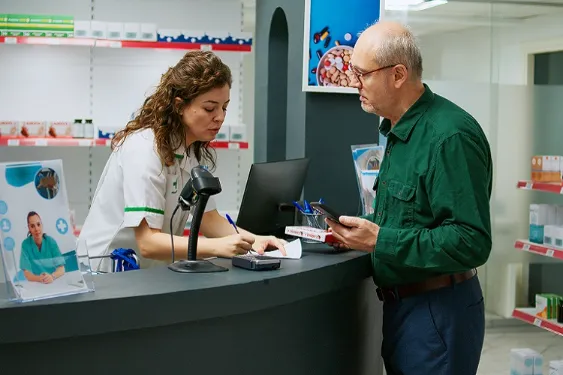
    In recent months, New Zealand has seen an alarming decline in pharmacists available to work in our hospitals and other healthcare facilities. With the demand for pharmaceutical services growing with each passing day, this significant shortage of personnel is now putting a strain on the entire healthcare system.

    Supermarket chain Countdown has confirmed it had closed some pharmacies indefinitely due to pharmacist shortages, and twenty more pharmacies are currently operating with reduced operating hours due to workforce shortages.

    In light of these circumstances, it’s become increasingly crucial for the Government to take action and invest in patient-centred initiatives such as improved wages and better working conditions for existing pharmacists and offering incentives for students looking to pursue pharmacy degrees. Such measures will help ensure that more skilled professionals are available to help meet patient needs on time.

    It is also crucial that steps be taken to provide further support and resources to existing pharmacists and those just entering the workforce. By doing so, we can all play our part in helping alleviate the current pharmacist shortages and create a healthier future for everyone.

    The Ministry for Business, Innovation and Employment (MBIE) said NZ employers could recruit pharmacists through the Accredited Employer Work Visa (AEWV) scheme if they wanted to. In addition, qualified pharmacists are also likely to be eligible for the Skilled Migrant Category criteria, which is expected to be updated mid-2023 by Immigration New Zealand (INZ).

    Skilled Migrant Category Reopens for Migrants After Long Pause

    The point-based Resident Visa that has been closed to new applications since April 2020, finally re-opens. The Skilled Migrant Category will be resumed under the current settings to help attract more workers. The first selection will be at 160 points, and subsequent selections at an increased threshold of 180 points.

    Important points to note:

    1. On 9 November 22, INZ will select all EOIs at the current threshold of 160 points.  However, after 9 November, the point threshold for selection will increase to 180 points. The next selection will take place on 18 January 2023. After 18 January 2023 selections will take place on the third Wednesday of each month.
    2. If you already have an EOI in the pool, you can choose to continue with it or withdraw it and seek a fee refund
    3. EOIs submitted before 9 May 2022 which do not result in an invitation to apply will expire and will not be reselected.

    At the same time as resuming selections, INZ is commencing consultation on a proposed new system that will future proof the category and will further complement the new Green List and Highly Paid residence pathways. Proposed changes include removing the planning range, so that all applications that meet the criteria will be processed. It will also include a more simplified points system, will set a clear, fair and transparent eligibility threshold and offer several ways for people to demonstrate their skill level.

    The proposed changes will also see a faster route to residence for very highly skilled migrants, such as university lecturers or scientists who hold a PhD, while other professionals such as teachers and registered tradespeople will have a clear route if they work for a period in New Zealand. Under the new system there will be no cap on the number of people who can gain residence each year, if they meet the skills threshold.

    Parent Category Residence Visa Re-Opens

    The Minister of Immigration Hon Michael Wood, announced the re-opening of the much awaited parent category residence visa. This category was closed down by the New Zealand government in October 2019 and was re-opened on 12 October 2022 with a few tweaks in the requirements which look promising for those migrants who have been waiting quite patiently to have their parents join them in the country they now call home.

    A snapshot of the relevant points

    1. The number of Parent Resident Visas that will be granted each year has been increased to 2,500 (from 1000 previously)
    2. Selections from the existing pool of Expression of Interests will resume on 14 November 2022 and will take place every three months after that till the current pool is exhausted.
    3. Up-to 2,000 visas a year will be granted to people with existing expressions of interest.
    4. With effect from 12 October 2022, any new expressions of interest submitted will go into a ballot rather than being added to the existing EOI queue and these EOIs will be eligible for selection for two years after submitting their expression of interest.
    5. An additional 500 visas a year will be granted from the ballot, starting with the first selection in August 2023, and then every three months after that.
    6. A sponsor needs to earn 1.5 times the New Zealand median wage (rather than twice). This increases by half the median wage for each joint sponsor or additional parent. Applies to existing expressions of interest with INZ and those submitted from 12 October 2022.
    7. Two adult children can also combine their income to sponsor parents. This is an additional option to one adult child and their partner, as previously.
    8. From May 2023, EOIs can be submitted online on the INZ website.

    What happens if your EOI is already in the pool?

    Existing EOIs will be selected from the pool in the date order that they were received by INZ. Each year 2000 places are available. First selection will take place on 14 November 2022 and will be undertaken every three months thereafter.

    INZ will contact you to give you the opportunity to update or withdraw your EOI. If you had withdrawn your EOI due to not meeting the income limit set before October 2019, you will be invited to submit an EOI to the queue.

    You can change your existing EOI in response to the changes, e.g. you may wish to add an adult child as a sponsor.

    If you choose to withdraw your EOI from the queue, you can request a fee refund.

    New Pathways to New Zealand Residence

    Closed borders and restricted border entry during the Covid-19 pandemic led to a severe labour shortage in New Zealand.

    Three New Residence Pathways

    On 27 July 2022, as part of the immigration rebalance plan, the New Zealand Government announced three new residence categories to make it easier for employers to attract & hire migrants in highly-skilled, hard-to-fill roles:

    1. Straight to Residence
    2. Work to Residence
    3. Highly Paid

    Immigration Minister Michael Wood has announced that the Government is keeping its promise of streamlining the immigration system to help relieve workforce shortage by providing significant humanitarian support.

    • From 5 September 2022 onwards, eligible skilled migrants who have a job or a job offer in specific roles on the Straight to Residence pathway will be able to apply for residence, both from offshore and onshore.

    This will benefit migrant workers who have skills in hard-to-find, nationally significant roles that New Zealand requires. The Straight to Residence pathway offers more certainty to some migrants like health practitioners, engineers, construction and infrastructure workers and IT professionals. It will also make it easier for New Zealand employers to easily attract and hire migrant workers in areas of skill shortage.

    Skilled migrants on the Work to Residence and Highly Paid resident pathways will be able to apply for residence from 29 September 2023 only after they have obtained 24 months of acceptable work in New Zealand.

    Refugee Quota Programme

    The details for the next three years of the Refugee Quota Programme have also been confirmed including the structure of the 2022-23 quota.

    Michael Wood has stated‘’ The Refugee Quota Programme is a reflection of New Zealand’s international humanitarian commitments to protect people who are not able to return safely to their home country’’

    The programme, which is back to its full capacity, will resettle 1,500 refugees each year. The proportion of places allocated to three out of four regions is being changed. The proportion of places for the Middle East and Africa has been increased from 15% to 20 % respectively.

    • 200 places will be allocated to resettle Syrian refugees including Kurdish minorities from Iraq, Jordan & Lebanon.
    • The number of emergency and urgent resettlement places has been increased from 35 to 100
    • 200 places have been specifically set aside for Afghan refugees for the 2022-23 period following the Taliban take-over of Afghanistan in August 2021.
    • As part of the quota’s international allocations, Afghan refugees will be considered for resettlement in New Zealand.

    The above changes have been made to ensure that the Refugee Quota Programme remains open to protecting the needs of the refugees coming into the country.

    Get in touch with Immigration Advisors New Zealand Ltd, which provides up-to-date immigration information so you can consider opportunities and prepare yourself for the future. To know all the required procedures, contact us at contact@nzimmigration.info  or call on +64 09 3790219.

    Sources: Link 1    Link 2

    Border Restrictions: Tourists may be Welcomed to New Zealand Sooner than Planned

    Sir David Skegg, an epidemiologist who has been advising the government on the Covid-19 response, thinks additional border restrictions may be lifted shortly, as the National Party advocates for all visitors to be let into the country.

    The government said yesterday that beginning at 11.59 p.m. on Wednesday, vaccinated New Zealanders returning to the nation who test negative on pre-departure would no longer be required to self-isolate upon arrival.

    The move is the second stage in the gradual reopening of the border, but the National Party believes it does not go far enough and is demanding for the border to be open to all travellers in order to jump-start the tourism economy.

    The administration heeded the urgent recommendations of the Strategic Covid-19 Public Health Advisory Committee.

    Sir David told Morning Report that the following two weeks would be extremely difficult on the health system as the height of the Omicron outbreak unfolded, and that it would be preferable to wait until then before making choices about opening to visitors.

    However, Chris Bishop, National Party Covid-19 response spokeswoman, told Morning Report that the tourism industry needs certainty right now in order to prepare ahead.  He further explained that people involved in the tourism industry are borrowing money and mortgaging their houses to get through.  We could help them by opening borders and reconnect New Zealand to the rest of the world to enable visitors in the country.

    While there would be some danger in such a move, Bishop said it was about weighing the “relative risk.”  He further explained that the relative risk of allowing vaccinated people, having passed the pre-departure test, to arrive in New Zealand and to go to a country with one of the highest number of cases a day, the relative risk is much lower.  He also weighed that against the incredibly difficult circumstances that the tourism sector of New Zealand has been in the past couple of years.

    On the other hand, Bishop also said that the now the grounded New Zealanders will be excited to see their friends and family in New Zealand once again.  However, Sir David said that this will only have “minimal impact” on New Zealand’s situation.  He explained that impact of this on the progression of the epidemic in New Zealand will very small.  He further explained that the New Zealand has thousands of new cases occurring every day…the number of people currently arriving at the airport and being infected averages 10 a day.  This will only increase as more people come into New Zealand.

    The New Zealand government has now requested that the advisory council reconsider the role of vaccination passes and mandates in the future.

    Source:  Link

    Visa Processing for Overseas Partners of Temporary Migrant Workers from July 2022

    Kris Faafoi, Minister of Immigration, has reconfirmed that the overseas partners of temporary migrant workers who are currently in New Zealand will be allowed to enter the country in the fourth phase of the border reopening plan. This phase starts from July 2022.

    Recently, the Minister had stated that short term visitors from visa waiver countries will be able to entry New Zealand in the fourth phase to enable people to reunite & meet the partnership requirements. Also, partnership visa processing for partners of work visa holders would resume during this phase.

    Temporary migrant workers and Kiwis were frustrated that they were not allowed to bring their overseas partners to New Zealand while the Government gave priority to tourists & travellers from visa waiver countries before them. The Minster’s comments on this topic had created confusion as it was assumed that he was referring to the overseas based partners from visa waiver countries like India & other South Asian countries.

    Following this confusion, the Minister has reiterated that partnership visa processing for all temporary migrants who are currently in New Zealand will open in the fourth phase (July) irrespective of whether or not the partner is from a vis waiver country.

    The Minister has further added that visa processing for partners of students from non-visa waiver countries will open in the fifth phase i.e. October 2022

    In addition to the above, the Minister has also declared that temporary migrant workers earning 1.5 times the median wages under the ‘Other Critical Worker’ criteria, will be able to bring their overseas partners & dependents to New Zealand in the second phase starting from 13 March 2022. Also, those people with border exceptions or with the ability to get one would be allowed to enter New Zealand and self-isolate. This includes people eligible under the current family reunification border exceptions.

    However, it is unclear when partners of New Zealand citizens will be allowed to enter the country. Immigration New Zealand (INZ) is reported to have stated that prioritizing the entry of foreigners is based on the requirements placed on them for visa processing.

    Source: Click here

    Significant Border Changes a Possibility in the First Half of The New Year

    According to Covid-19 Response Minister Chris Hipkins, the coronavirus will ultimately become “endemic” in New Zealand, and there may be “major” adjustments to the borders in the first half of 2022.

    Because of the Omicron variant’s high infectiousness, many epidemiologists throughout the world believe endemic Covid-19 is inescapable.

    Endemic does not imply it is harmless; rather, it implies that Covid-19 is predictable and treatable, similar to other respiratory disorders such as the flu.

    Covid-19 was effectively kept out of New Zealand until August 2021, when a Delta epidemic necessitated a change in tactics. The virus has been effectively controlled since then. Hipkins has stated that it was never a five-year plan to keep Covid-19 out of New Zealand. It was always about getting everyone vaccinated and better prepared was always a priority.

    The Government postponed a planned release for MIQ (Managed Isolation and Quarantine) rooms in March and April earlier this week, leaving many to wonder about the border’s future.  Additionally, Hipkins has hinted at big movements in the first half of 2022.

    He said the plan will be driven by a desire to keep contagious persons out of the community, particularly those travelling from outside, in order to avoid seeding instances and explosive outbreaks.

    The government would nonetheless proceed to a “self-isolation” paradigm, in which people are instructed to stay at home to ensure they are not contagious, rather than relying on MIQ.

    While Omicron is spreading fast in other parts of the world and New Zealand has only limited cases right now, however, this will change rapidly if New Zealanders follow the self-isolation paradigm.

    At this moment, no decision has been taken, but Hipkins said that the Cabinet has acknowledged that the decision cannot be postponed indefinitely.

    Source: Click here

    No Teachers Despite Border Exception

    Since the closure of New Zealand borders in March 2020, it has faced an enormous employment shortage, including teachers. As a result, few border exceptions have been allowed.

    Taking note of this shortage, in July 2021, the New Zealand Government had announced a border exception for 300 overseas qualified teachers to come to New Zealand.

    However, getting a Managed Isolation & Quarantine (MIQ) slot is a huge challenge. Recently there has been a demand for MIQ spot allocation for teachers as the shortage mounts. Only a few handfuls of teachers entered New Zealand under this policy, leaving schools to find replacement teachers for Term 1.

    Even if allowed to enter New Zealand for Term 2, teachers still have to book a MIQ slot which is like winning the lottery. There is a shortage of teachers in STEM subjects and the failure to bring in teachers will affect students.

    Since the announcement of the policy last July, the Government has moved at a snail’s pace to open the application system for teachers in November 2021. In addition to this, the Christmas holidays left very little time for recruitment, visa processing & MIQ booking. In December 2021 the Secretary of Education shockingly announced that no teachers had arrived as they were unable to book MIQ slots and that they wouldn’t arrive until term 2.

    Education Minister Chris Hipkin’s inaction has cost students dearly. There is a demand that some MIQ spaces be kept aside for incoming teachers to enable them to begin from Term 1. The Minister has been criticized for not being able to get teachers before 1 November or having MIQ spots reserved for them. As a result, students already affected by the lockdowns will have to pay a heavy price for this.

    Source: Click here

    New Border Exceptions For Skilled Workers

    On 13 December 2021, the New Zealand Government announced new border class exceptions to bring skilled workers into New Zealand while the borders are still shut.

    One of the border class exceptions is for the technology sector, allowing 600 much-needed specialist tech workers, their partners, and dependent children to enter New Zealand.

    The NZ tech sector continued to expand even during the Covid-19 pandemic, which led to an increase in the demand for talent.

    The aim is to help those tech sector areas most in need of overseas talent like software development, product managers, cyber security, and interactive media.

    The class exception includes four categories of workers: Software and Application Programmers, ICT Managers, ICT Security Specialists and Multimedia Specialists. In addition, an annual salary threshold has been set, which will have to be met.

    The Government has been working closely with the tech sector to address their challenges. This is part of the Government’s phased approach of reconnecting New Zealand with the rest of the world. It is currently working on the finer details of this scheme and hopes to have it operational by early 2022.

    Another border exception is for 180 external auditors who meet certain requirements, their partners & dependent children.

    Besides the above, some existing border exceptions have been renewed for 200 rural contractors40 shearers615 deep-sea fishing crew30 travellers per month nominated by the Australian Department of Foreign Trade (DFAT) to transit New Zealand 550 cargo crew servicing the Pacific.

    The already existing border exception for 200 dairy workers has been changed – the split between the number of assistant dairy farm managers and dairy farm assistants has been removed, and the wage requirement of the latter has been increased.

    All welcome the border exceptions as they bring much-needed respite to the different sectors affected by the pandemic for the past two years. More information regarding the border exceptions will be announced in the new year.

    Source: Link 1    Link 2

    Resettlement of Afghan Nationals in New Zealand

    Since the fall of Afghanistan to the Taliban earlier this week, Afghan nationals are desperately trying to leave the country to escape the terror & atrocities that will befall them.

    The New Zealand Government has announced a resettlement plan for Afghan nationals who have assisted the New Zealand Defence Force and other government agencies during New Zealand’s deployment to Afghanistan. The immediate family members of these Afghan nationals– partners & dependent children, will also be considered.

    Afghan nations need to meet some criteria to be eligible for resettlement in New Zealand. These include:

    • Worked directly with the New Zealand Defence Force, New Zealand police, the Ministry of Foreign Affairs & Trade or any other New Zealand agencies in Afghanistan or were employed by third parties who worked alongside these agencies. This will need to be verified by those agencies. OR
    • Provided material assistance during the inquiry Operation Burnham and can be verified by relevant parties AND
    • There are reasonable grounds to believe that the safety or well-being of the individual or their immediate family is at risk because of their association with New Zealand in Afghanistan and no other partner government will bear greater responsibility for their welfare.

    For any assistance, please contact Immigration Advisers New Zealand Ltd at contact@nzimmigration.info or call on +64 09 3790219. Our experienced team of licensed immigration advisers will be happy to guide you.

    Source: Click here

    The Four-Step Plan For Re-opening New Zealand to the World

    In March 2020 New Zealand shut its borders to the rest of the world in order to prevent the spread of the Covid 19 pandemic and safeguard its citizens. Entry into New Zealand has been strictly controlled since then. Stringent border restriction shave affected the flow of migrants into the country thus affecting businesses & industries. Migrants already in New Zealand have had to face numerous visa related challenges, causing them a lot of distress and family & friends have been separated.

    On 12 August 2022, the New Zealand Government announced a plan to slowly open up New Zealand to the rest of the world.

    Unfolding Situation

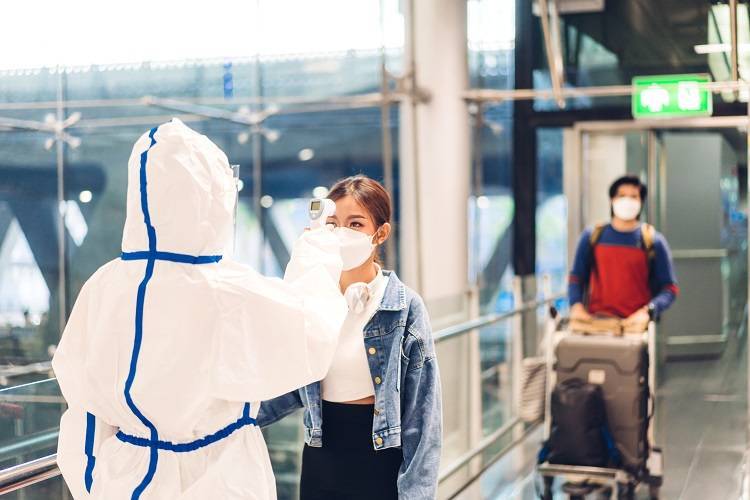
    Up till now, it was mandatory for anyone entering New Zealand to use the mandatory quarantine facility called Managed Isolation and Quarantine (MIQ). The plan now is to test self-isolation instead of MIQ for vaccinated people. A new border system based on low, medium and high-risk assessment will start from early 2022.

    From 1 September 2021, vaccinations will be made available to all age groups. Also, the gap between the first and second doses will be increased from three weeks to six weeks. People will be expected to wear masks and there will be QR code scanning at higher alert levels.

    The Skegg report on reconnecting New Zealand to the rest of the world was based on work done by public health specialists and it recommends full vaccine rollout to start opening up to the outside world.

    Four Step Plan

    A four-step plan has been announced for border management. New Zealand Prime Minister Jacinda Ardern has stated that the Government will try to vaccinate as many people as possible in the second half of 2021 and start trials for vaccinated people isolating at home instead of at MIQ facilities.

    The new border system will assess people’s risks individually:


    • Low risk: This will include travellers from low risk countries who will not require isolation
    • Medium risk: This will include vaccinated travellers from medium risk countries and will have modified isolation requirements
    • High risk: This will include unvaccinated travellers and all travellers from high risk countries. They will have to spend 14 days in MIQ

    Prime Minister Jacinda Ardern Message

    The new system requires pre-departure tests and further testing for people coming into New Zealand with the need to speed up vaccination rollout.

    Arden has stated ‘’Which pathway a traveller takes will be based on the risk associated with where they are coming from and their vaccination status.’’ Ardern wants everyone to be at least partially vaccinated to reduce the risk of the Delta variant entering the country.

    The first step, of the four-step plan, is the current situation with an immediate response and targeted vaccinations. The second step is vaccinating more people and trialling self-isolation & other measures. The third stage includes individual risk- based border assessment with lockdowns less likely. The fourth stage will have vaccinated travellers eligible for quarantine-free travel after returning a negative test.

    Arden has praised New Zealand’s response to the notorious Covid 19 pandemic because of which they had minimal cases compared to other worse hit countries.

    Source: Click here